


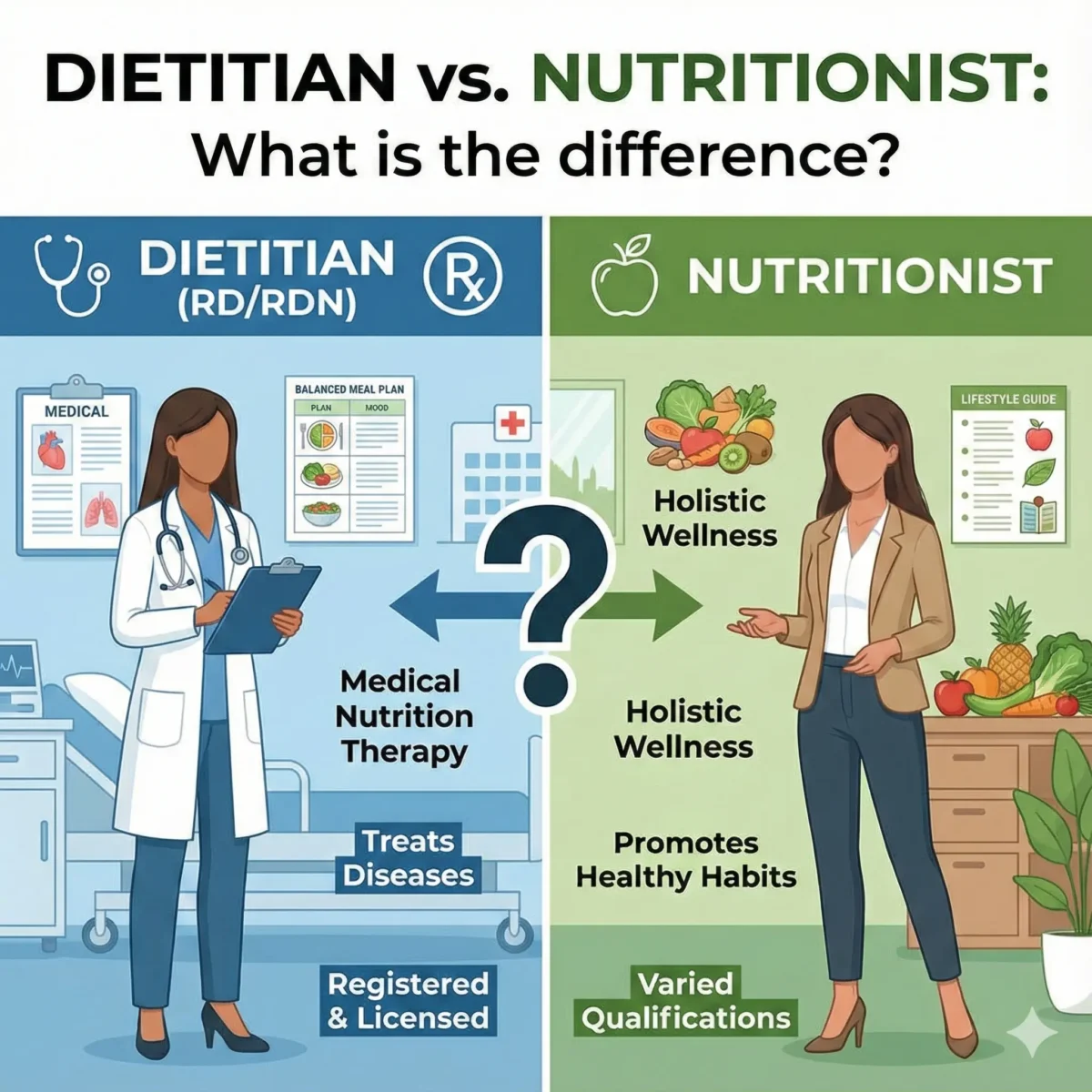
Ever wondered what's up with the terms “dietitian” and “nutritionist”? You are not alone! The internet, wellness gurus, and even some clinics use them conversely. But here's the thing: the professional you pick can seriously affect your health like your recovery, weight goals, hormones, and well-being down the road.
Both, nutritionist and dietitian can help you eat better, but they have very different training and roles. This guide will break it down simply, so you will know just who to go to if you are dealing with gut problems, aiming to lose weight, managing PCOS, or need a special diet.
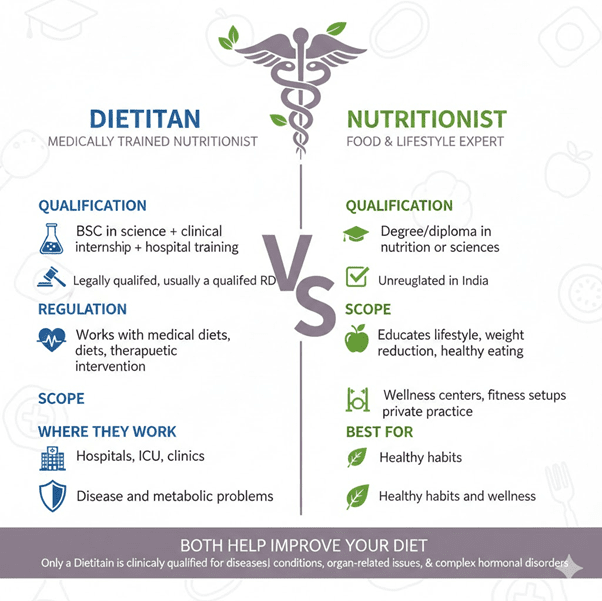
A dietitian is a nutritionist who is medically trained.
A nutritionist is a food and lifestyle expert.
Both help improve your diet, but just one is clinically qualified to deal with diseases, medical conditions, organ-related issues, and complex hormonal disorders. That’s the real difference.
Dietitian - MSc in science + clinical internship + hospital training.
Nutritionist - Degree in nutrition or sciences.
Dietitian - Legally qualified, usually a qualified RD.
Nutritionist - Unregulated in India.
Dietitian - Works with medical diets, therapeutic intervention.
Nutritionist - Educates lifestyle, weight reduction, healthy eating.
Dietitian - Hospitals, ICU, clinics.
Nutritionists - Wellness centers, fitness setups, private practice.
Dietitian - Disease and metabolic problems.
Nutritionist - Healthy habits and wellness.
Dietitian
A dietitian takes years to study medical nutrition, food science, clinical dietetics, biochemistry and dietary therapy of specific diseases. A standard path includes:
Nutritionist:
The career of a nutritionist will be based on the course. Others have degrees, others diplomas and some as well undertake specialized education in wellness, fitness or sports nutrition.
Medical institutions, such as AIIMS, ICMR-approved hospitals, and the IDAI-approved programs provide the training of dietitians. They are liaisons with physicians.
Clinical internships are not necessary amongst nutritionists.
Certification Bodies
Such certifications are applicable to the dietitians and not nutritionists.
Diabetes, PCOS, kidney disease, fatty liver, thyroid, and pregnancy complications and GI problems can be prescribed a therapeutic diet through dietitians.
Nutritionists have the ability to curate general wellness plans and lifestyle-based diets.
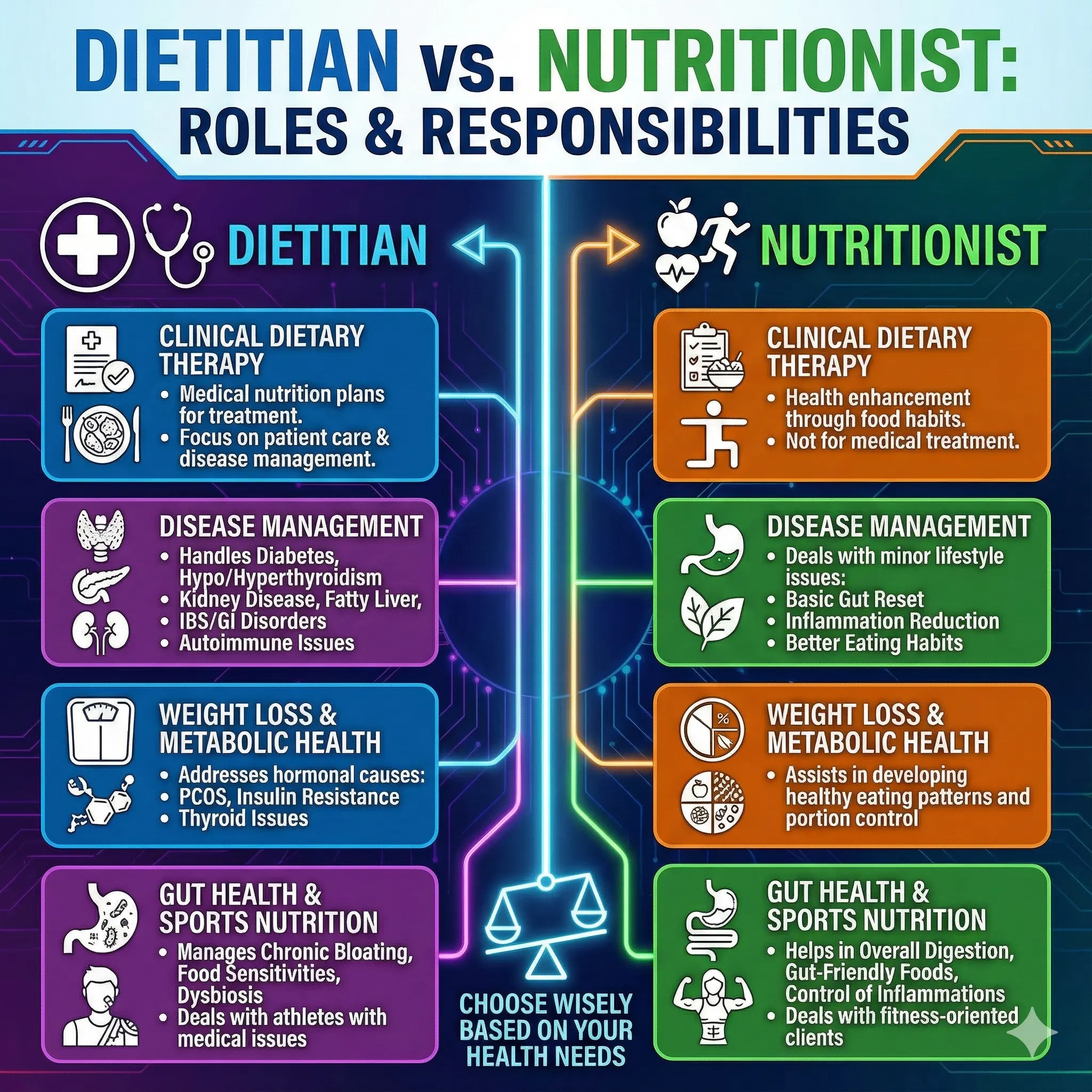
Medical nutrition plans are made by dietitians, which frequently involve treatment of the patient.
Nutritionists believe in health enhancement by food habits and not medical treatment.
Dietitians handle:
Nutritionists deal with minor lifestyle issues as:
A dietitian collaborates with the causes of weight gain that are hormonal such as PCOS, insulin resistance or thyroid issues.
A nutritionist will assist in developing healthy eating patterns and eating portions.
IBS, reflux, chronic bloating, food sensitivities, and dysbiosis are dealt with by a dietitian.
A nutritionist helps in overall digestion, foods that are friendly to the gut, and control of inflammations.
Dietitians deal with athletes with medical issues.
Fitness oriented clients are dealt with by nutritionists.
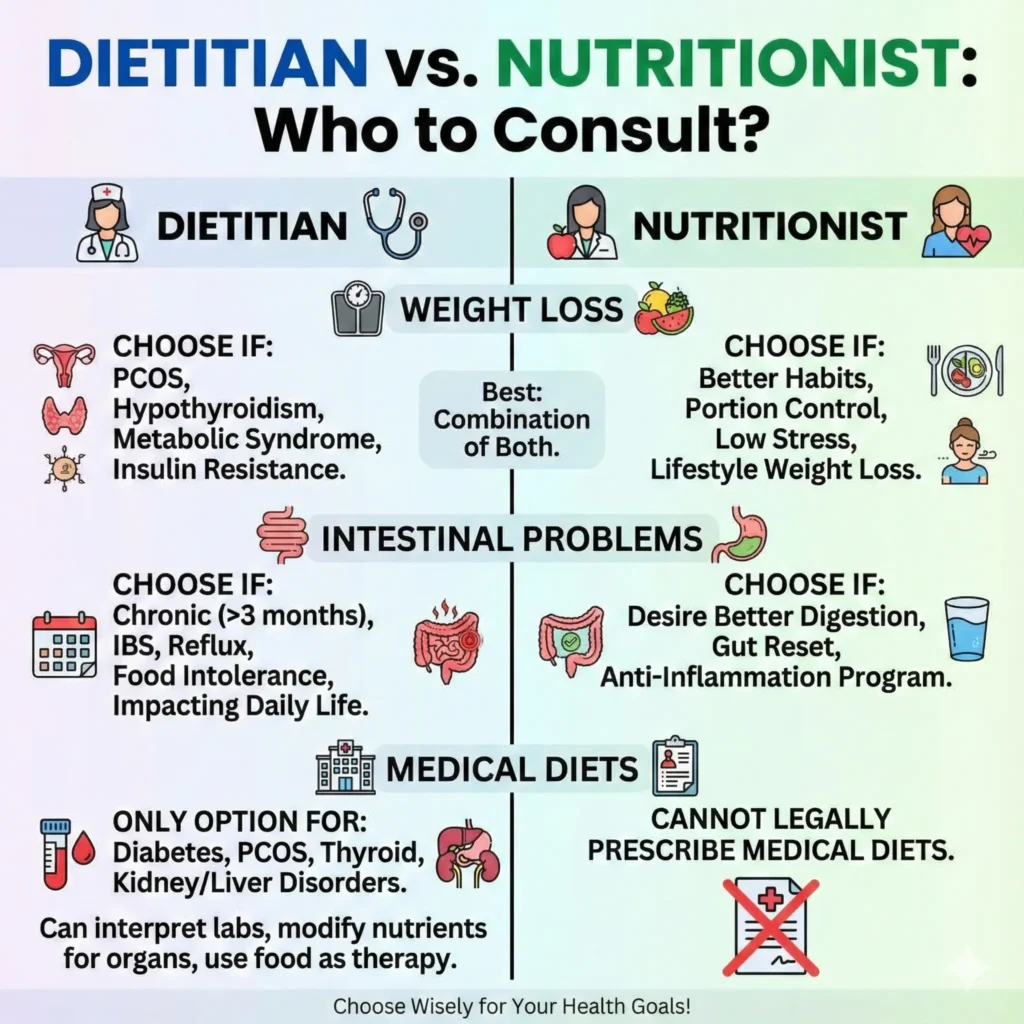
Choose a dietitian if:
Choose a nutritionist if:
Choose a dietitian if:
Choose a nutritionist if:
Medical diets can only be dealt with by a dietitian since:
Both can be of help, but in different ways.
Dietitians are better for:
Nutritionists are best for:
In fact, most women actually benefit from a hybrid approach: medical accuracy + lifestyle sustainability.
Use this easy checklist:
Red flags:
Myth 1: Nutritionists can prescribe medical diets.
Fact: Only dietitians are trained to do so.
Myth 2: Dietitians work only in hospitals.
Fact: Most run their own private practices.
Myth 3: Plans to lose weight are the same.
Fact: Plans look alike only when unqualified people copy-paste them.
Myth 4: Supplements are always needed
Fact: Supplements are not necessary and should be prescribed only when needed.
Myth 5: You must have expensive tests to lose weight
Fact: Basic blood work is all most people need.
These tools drive better decision-making based on your body data:
If you have a medical condition, hormonal imbalance, or chronic symptoms, always choose a dietitian. If your goal is lifestyle improvement, long-term habit change, or sustainable weight loss, a nutritionist is a great choice. For most people, the best results come from an expert who can balance both clinical nutrition and practical, everyday eating habits. For personalized, science-backed guidance, working with an expert who blends clinical nutrition with lifestyle coaching like Dr. Silky Mahajan, who is usually the ideal approach.