

One of the most prevalent health concerns in the current times is the digestive problems. Never-resolving bloating, constipation, unexplainable fatigue, food allergies, acne, frequent infections or difficult-to-lose weight, much of this is related to one underlying issue, which is poor gut health.
Gut health is never about treating individual symptoms. It is concerning the comprehension of the interaction between the digestive system, gut bacteria, immune system, and the lifestyle as a single system. A gut health test may assist in the explanation of what is actually occurring within the gut in some situations, yet only after it has been used right and interpreted properly.
Clinically, from a nutritional perspective, the gut has four key functions:
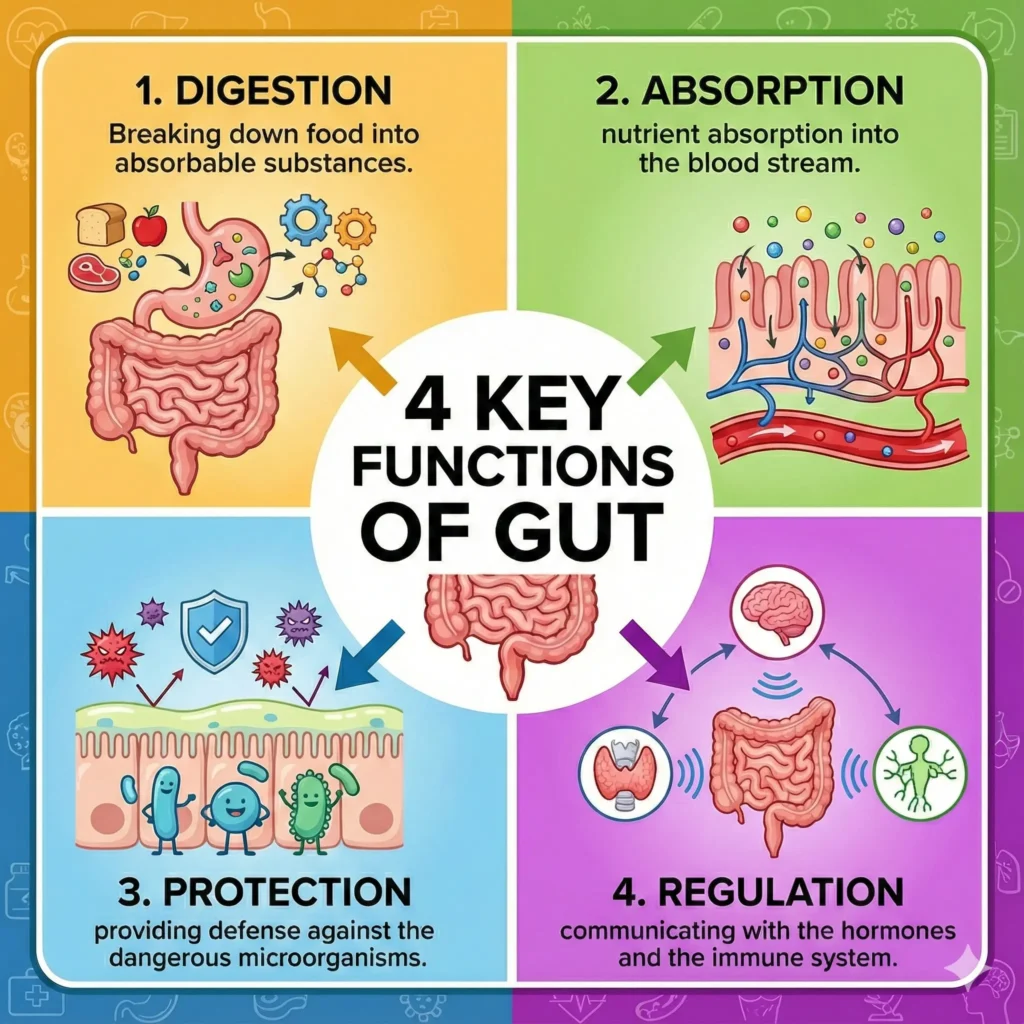
As any of these functions start to become weak, symptoms start to appear. Notably, the symptoms show up far more away from the gut, e.g. in the skin, mood, energy levels, or immune resilience.
That is why nutritionists do not rely just on food charts and concentrate on gut functions and microbial balance.
Gut bacteria are microbes, which exist mainly in the large intestine. They are neither good nor bad, their effect lies in the type, quantity and balance.
A healthy gut contains:
When this balance is disrupted problems start to arise.
In this event, a better diet might not suffice, this is where a gut test might be taken into account.
One of the myths is that all people should have their gut microbiome tested. However, research says, it’s not always true.
A gut health test is applicable in situations where:
In case symptoms can be improved under the influence of simple diets, it may not be necessary to test.
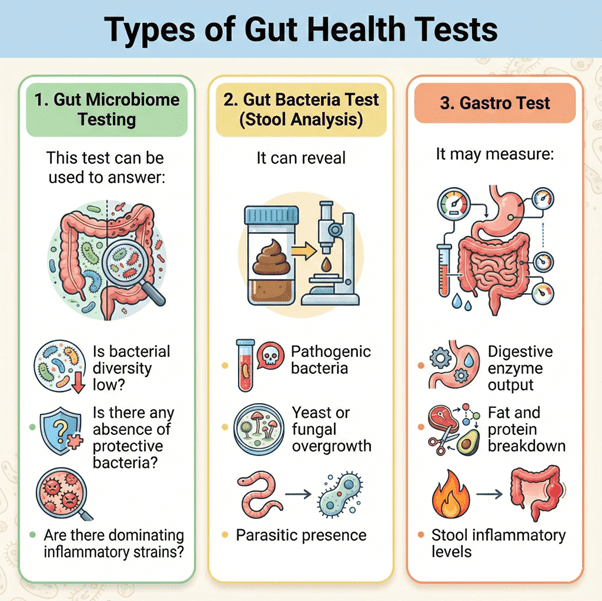
This is a test that analyzes the makeup and heterogeneity of gut bacteria using a stool sample.
This test can be used to answer:
It not only diagnoses disease but also gives an understanding of microbial trends that affect digestion, immunity, and inflammation.
A gut bacteria test is more oriented on the identification of certain problematic organisms.
It can reveal:
The test is commonly advised in case the symptoms are acute, abrupt or exacerbated by travel or antibiotics.
The gastro test is used to examine food digestion and food absorption.
It may measure:
This test is usually conducted by nutritionists who are dealing with patients who have a well-balanced diet yet exhibit a deficiency in nutrients or drowsiness.
The gastro test cost is different as various tests evaluate various levels of gut health.
The worth of the test is not what the test is, but what the results are actionable.
Here’s what that matters in your test:
Microbial Diversity: A low level of diversity can be an indicator of food monotony or stress.
Beneficial Bacteria Levels: The low levels mean that we should not take aggressive supplementation but rather prebiotic-rich foods.
Inflammation Markers: These imply irritation of the gut lining, which in most cases can be reversed on changing diet and lifestyle.
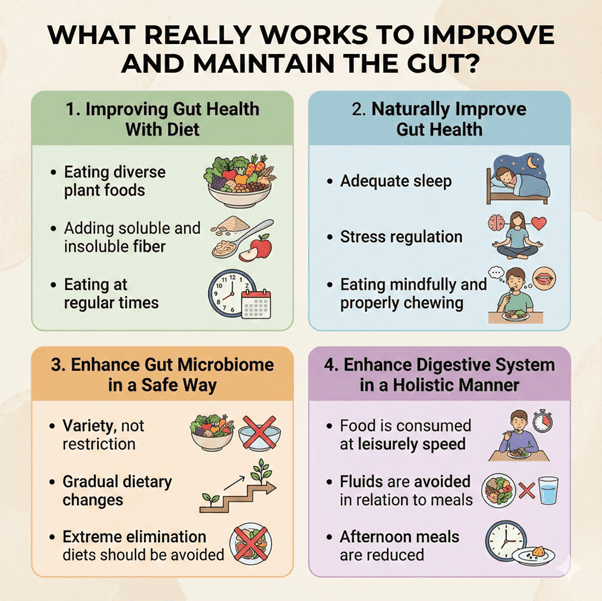
The nutritionists lay stress on regularity rather than intensity. In order to improve gut health, emphasize on:
Such practices are more effective in maintaining bacterial balance as compared to the supplements.
Improved gut of nature depends on:
These are the direct factors that affect digestion and gut motility.
Good microbiome survives on:
Foods which are over-restricted further decrease the microbial diversity.
Digestive health is enhanced because:
These basic routines are beneficial to enzyme activity.
The intestinal health is supported by:
The gut reacts to the mind, the same way it reacts to food.
Restoration should be slow after illness or on taking of medicine:
The imbalance is usually aggravated through quick fixes.
Your gut doesn’t heal overnight. It reacts gradually to our eating, living, and stress, managing habits, which is the reason why symptoms often develop slowly and get better in the same way.
Gut health tests are a good pick when digestive issues continue stubbornly in spite of consistent efforts. They are not a remedy by themselves, but a means to understand what the gut needs better. If taken correctly, they are an invitation to smarter and more personalized changes instead of quick fixes.
Eventually, a healthy gut is the outcome of a balanced, patient, and sustainable lifestyle. When the emphasis is taken away from result chasing and put on supporting the digestive system daily, the improvement becomes a natural consequence.
Gut health tests in India, primarily gut microbiome tests, analyze your gut bacteria via stool samples to find imbalances linked to digestive, metabolic, or immunity issues.
The best gut health test is the Stool Microbiome Test which offers the most comprehensive look at your gut's microbial diversity, function and diagnosing specific concerns. For general wellness, microbiome tests are great, but for specific symptoms, see a doctor for a clinical stool or blood test.
A gut microbiome test in India can generally cost between Rs 2,500 to Rs 20,000 or above, depending on the depth of analysis.
To improve gut health, eat fiber-rich plant foods including fruits, veggies, whole grains, legumes for prebiotics, fermented foods like yogurt, kimchi, kefir for probiotics, and diverse whole foods like nuts, seeds, garlic, and leeks.
Signs of bad gut health include digestive issues like bloating, gas, constipation, diarrhea, heartburn, stomach pain, skin problems, including acne, eczema, persistent fatigue, mood changes, anxiety, depression, brain fog, sleep disturbances, sugar cravings, food intolerances, unexplained weight changes, and frequent infections.
A 7-day gut reset is a temporary eating plan to improve digestion by focusing on whole, fiber-rich, probiotic foods and prebiotics, while cutting out inflammatory items like sugar, processed foods, and alcohol, aiming to balance gut flora, reduce bloating, and boost energy for better long-term gut health through gentle nourishment.
Gut inflammation can cause symptoms such as abdominal pain/cramping, persistent diarrhea, severe fatigue, unexplained weight loss, reduced appetite, fever, urgency to use the bathroom, and sometimes issues outside the gut like joint pain, skin problems, or even eye irritation.
To quickly reduce gut inflammation, adopt an anti-inflammatory diet with fruits, veggies, omega-3s, probiotics, cut sugar, processed foods, alcohol, manage stress with yoga/meditation, stay hydrated, eat smaller meals, get enough sleep, and consider gentle remedies like ginger, but always consult a doctor for persistent issues to identify the root cause.
Yes, blood tests can significantly help assess gut health by revealing inflammation, infections (like H. pylori), nutrient deficiencies (B12, iron), liver function, immune responses, and even predicting microbiome health.
A diverse, plant-based diet that include various veggies, pre and probiotics like the well-know and easy-to-follow Mediterranean Diet will give you the range of fiber and nutrients that your gut bacteria need in order to thrive.