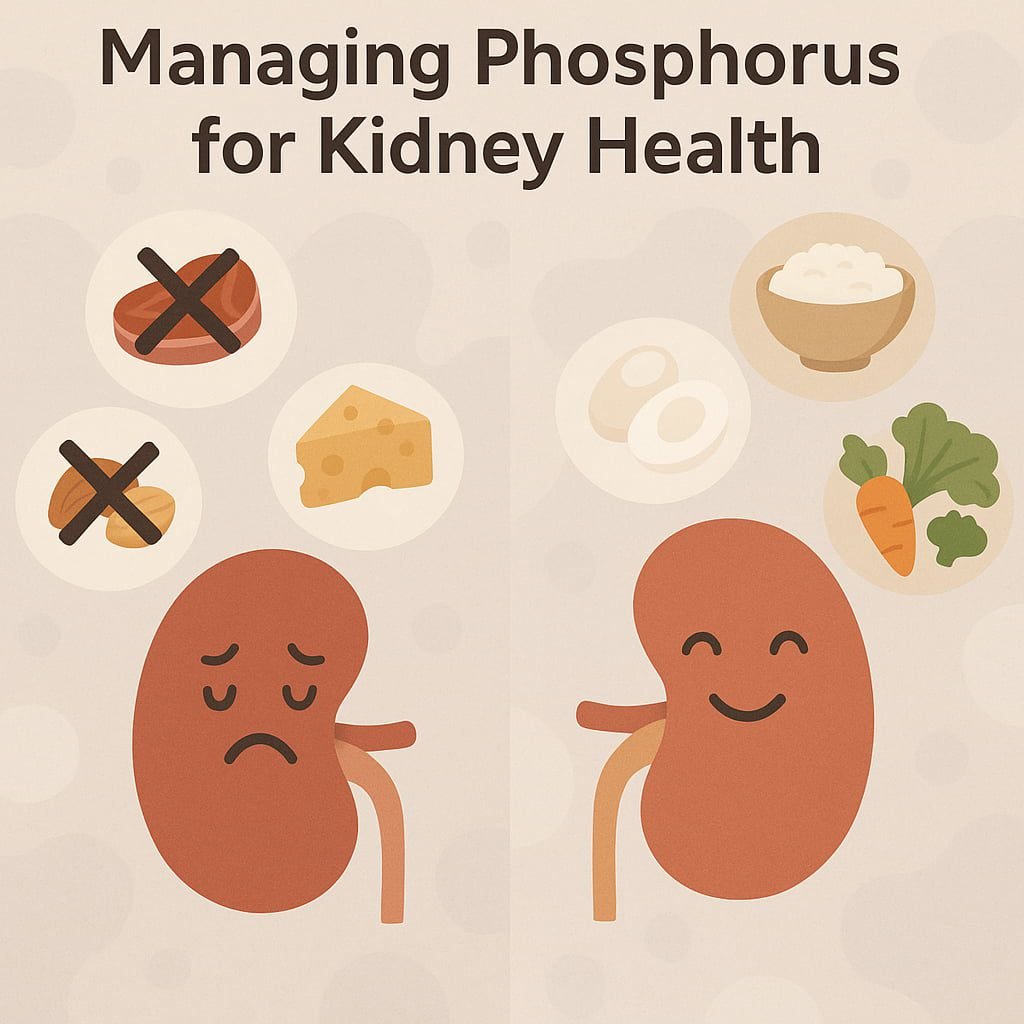


Struggling with high phosphorus levels, especially if you have chronic kidney disease (CKD)? You’re not alone. Phosphorus is a mineral found in many high-protein foods, and while it’s essential for strong bones and energy production, too much of it can become dangerous—especially when your kidneys aren’t functioning properly.
In healthy individuals, kidneys filter out extra phosphorus. But in those with CKD, this filtration process is compromised. As a result, phosphorus begins to build up in the blood, leading to:
Over time, this imbalance can make CKD worse and impact overall health.
Many common protein-rich and whole foods are surprisingly high in phosphorus. Here’s what to cut back on or avoid, especially if you’re not on dialysis:
These foods can silently add to your phosphorus burden.
Good nutrition doesn’t have to be complicated. Here are kidney-safe alternatives:
Make sure to read nutrition labels carefully. Some packaged foods sneak in phosphorus-based preservatives.
If you’re in early to moderate CKD stages and not on dialysis, a balanced, moderate-protein, low-phosphorus diet can reduce kidney stress and slow disease progression.
Always work with a registered dietitian or nephrologist who can help customize your intake based on your labs and lifestyle.
Managing phosphorus levels is crucial for kidney health, especially if you're living with CKD. While it may feel restrictive at first, smart food swaps and mindful choices can go a long way in protecting your bones, heart, and kidneys.
Remember: it’s not about cutting out all protein—it’s about choosing the right type and amount, and limiting phosphorus-rich foods. And always consult your doctor or nutritionist before making any major dietary changes.
In case of any related query related to nutrition or weight management book an appointment with Dt. Silky Mahajan .You can also send us a mail at info@foodsandnutrition.in or call on 7829999400. Follow us on facebook & instagram for latest updates.