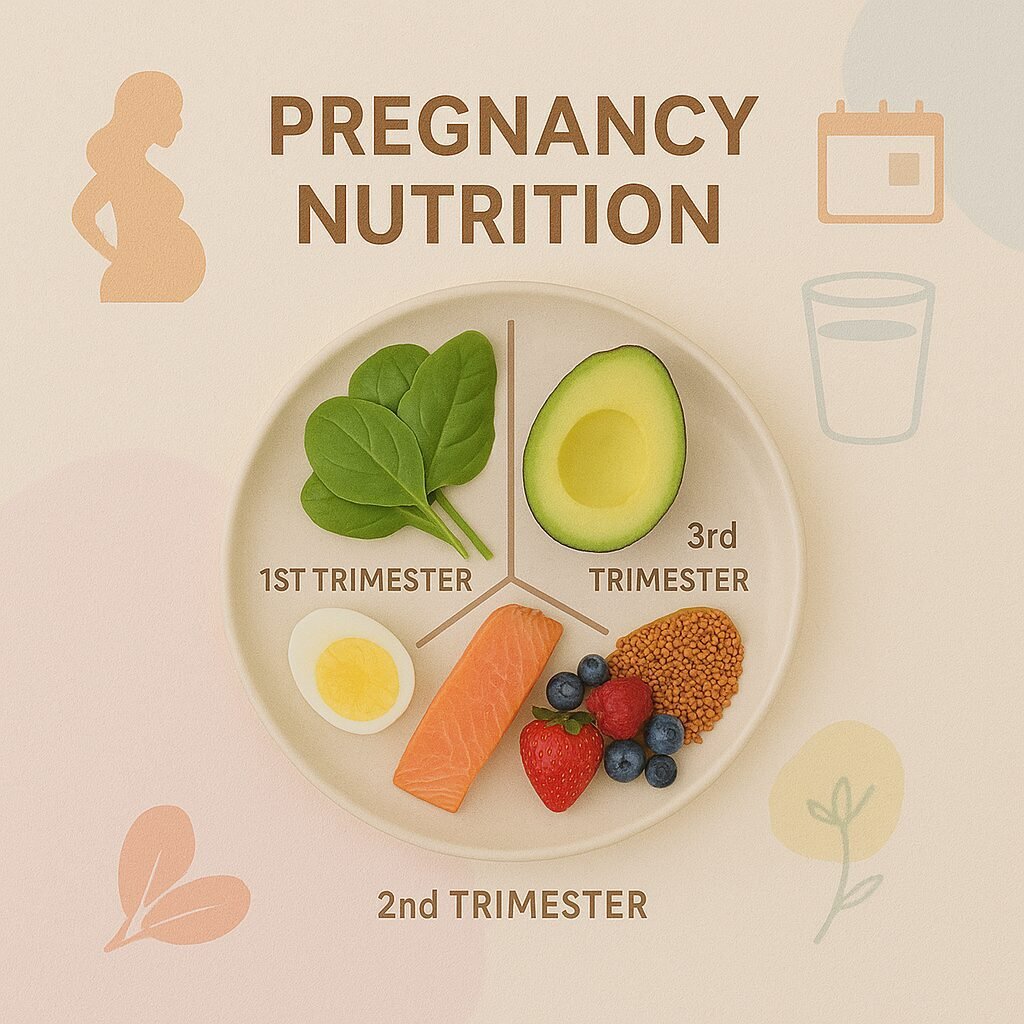


Pregnancy is one of the most beautiful phases of life — but it can also be confusing when it comes to food choices. What you eat directly supports your baby’s growth and your overall health.
Here’s a simple, month-by-month nutrition guide to help you nourish your body and your baby through each stage of pregnancy.
In the early months, your baby’s organs begin to form. This is a crucial time for fetal development, and morning sickness can make eating tricky.
Focus on:
Tip: To manage morning sickness, have dry crackers or whole wheat toast before getting out of bed. Eat smaller, more frequent meals throughout the day.
Your baby starts growing more rapidly now. This stage demands more protein, healthy fats, iron, and calcium to support bone and muscle development.
Focus on:
Tip: Pair iron-rich foods with Vitamin C sources like citrus or amla to improve absorption.
In the final stretch, your baby’s brain, eyes, and immune system are developing rapidly. Your body is also preparing for labor, so nourishment and rest are equally important.
Focus on:
Tip: Include fiber and gentle movement to prevent constipation, a common concern during late pregnancy.
Pregnancy nutrition isn’t about eating more — it’s about eating right. Each trimester brings unique changes, and your diet should evolve accordingly. Focus on whole, nutrient-dense foods, stay hydrated, and listen to your body’s signals.
Before making major dietary changes or starting supplements, always consult your doctor or a certified nutritionist. With mindful eating and balance, you can support both your baby’s healthy development and your own well-being.
Share this with an expecting mother who’s unsure where to start — a little guidance can go a long way toward a healthy, happy pregnancy.
In case of any related query related to pregnancy nutrition or weight management book an appointment with Dt. Silky Mahajan .You can also send us a mail at info@foodsandnutrition.in or call on 7829999400. Follow us on facebook & instagram for latest updates.